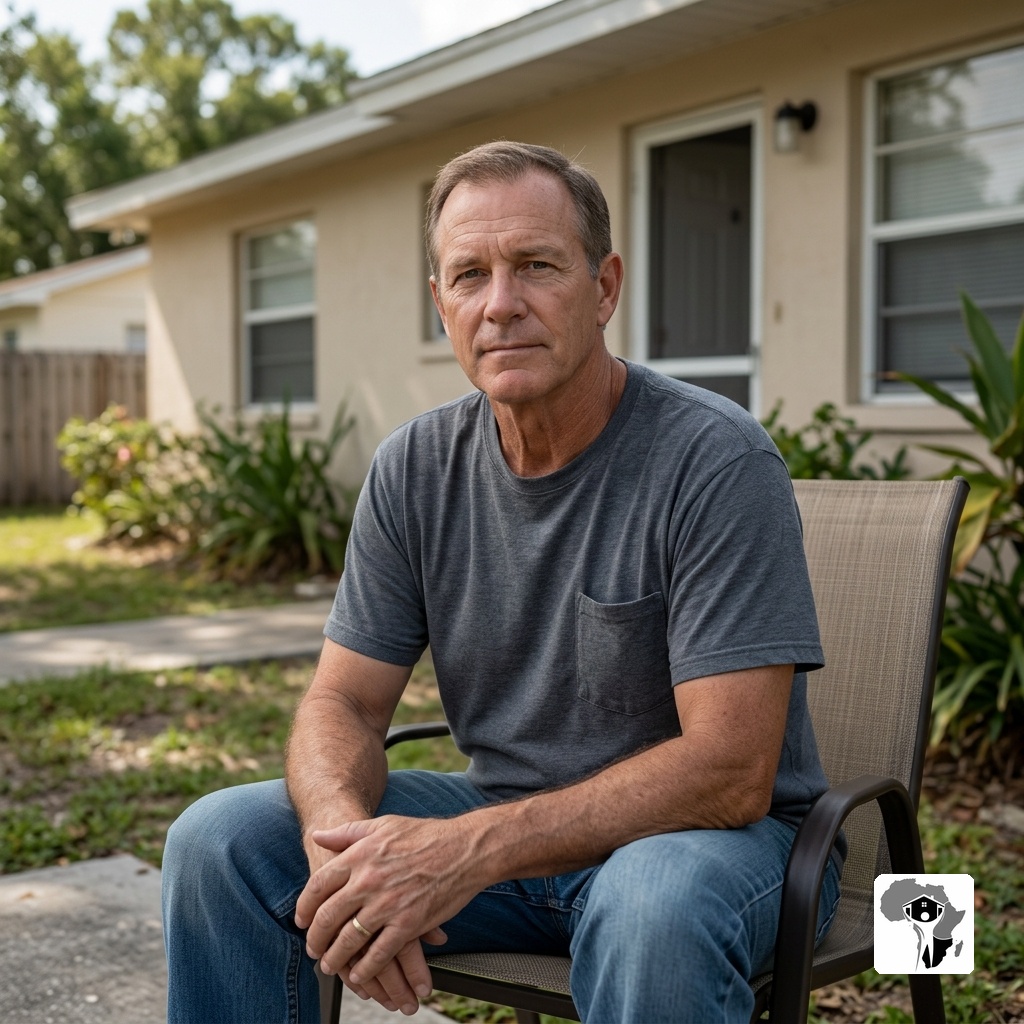
Leo Schofield returned to life outside prison after more than three decades behind bars. (Digital Illustration: GoBeyondLocal)
The Innocent Man Who Forgave His Wife's Killer
Leo Schofield went into prison in 1989 carrying a conviction for the murder of his young wife.
He had always said he did not kill Michelle.
Decades passed before a name from the murder investigation returned to the case. It belonged to Jeremy Scott, a man already serving a life sentence for another murder.
Then came a confession.
Michelle Schofield was 18 when she disappeared in February 1987 in Polk County, Florida. Her abandoned car was later found near an interstate. Her body was discovered in a drainage canal.
Leo, who was 21, became the focus of the investigation. Two years later, a jury convicted him of first-degree murder and he received a life sentence.
The case against him included evidence that later became central to the fight over his conviction. Several fingerprints had been found inside Michelle car. At the time, investigators did not know who had left them.
Leo used those prints in his defence, arguing that another person could have been involved in the killing.
Leo remained behind bars while the unidentified fingerprints stayed in the case files. More than a decade into his sentence, testing connected them to Jeremy Scott.
Scott was already serving a life sentence for an unrelated murder. Later, he said he had killed Michelle.
The confession added another piece to a case that had already consumed much of Leo life. Scott described details that investigators could compare with known facts from the 1987 killing.
Leo legal team continued seeking a new examination of the conviction, while courts rejected earlier attempts to overturn it.
Outside prison, the case began reaching a much wider audience. The Bone Valley podcast followed the evidence, the history of the investigation and the long effort to free Leo.
The renewed attention brought fresh public interest to a man who had spent most of his adult life behind bars while insisting that he had been wrongly convicted.
In April 2024, the Florida Commission on Offender Review granted Leo parole. On April 30, he walked out of Everglades Correctional Institution after more than 36 years in prison.
Freedom came without the legal ending he had wanted. His murder conviction remained in place, and the effort to clear his name continued.
Life outside prison also meant returning to people he had lost years with. His son had grown into adulthood while Leo was incarcerated. Father and son now had to build a relationship after decades that could not be recovered.
Leo also had to learn ordinary things again, including the technology and routines that had changed while he was away.
Then another part of the story became difficult to explain.
Leo had a chance to hear from Jeremy Scott directly. The man whose confession pointed toward Michelle death was still serving a life sentence when the two began communicating.
Leo chose forgiveness.
The decision did not erase Michelle death. It did not restore the years spent in prison. It did not settle the legal fight over Leo conviction.
It was simply a choice Leo made after living with the consequences of the murder for most of his adult life.
That choice sits beside the unfinished legal question. Leo has been released, but the conviction has not been overturned.
His lawyers continue seeking the full clearing of his name, while evidence pointing toward Jeremy Scott remains central to the case.

Latest Dispatches

The WhatsApp Message That Came 16 Years Late
8 Aug 2026
The Invisible Shipwreck
7 Aug 2026
He Jumped Off a Mountain to Escape
7 Aug 2026
She Cleaned Boko Haram Guns Before Escaping Sambisa
7 Aug 2026
She "Fell From the Sky" at 4am
7 Aug 2026
The Wedding That Looked Like a Crime Scene
7 Aug 2026

.webp)