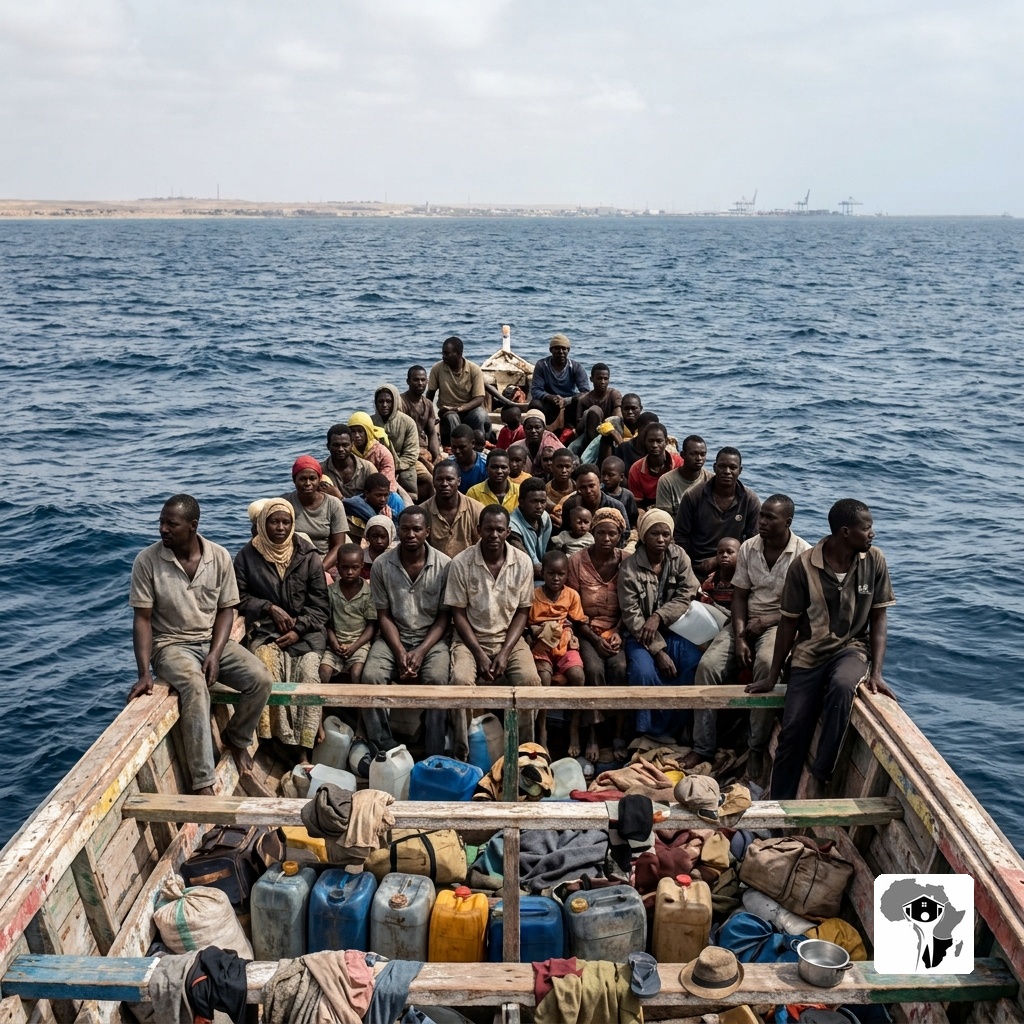
A realistic editorial reconstruction of the wooden vessel that spent nearly 25 days stranded in the Atlantic before 38 survivors reached Mauritania. (Digital Illustration: GoBeyondLocal)
The Invisible Shipwreck
The boat had been at sea for nearly 25 days when it reached the waters off Mauritania.
It had left Bufaloto in The Gambia carrying people who hoped to reach Spain.
The intended destination was the Canary Islands, part of a route used by people travelling from West Africa across the Atlantic.
The crossing lasted far longer than the passengers had expected.
When help finally reached the vessel on July 18, only 38 people were alive.
The passengers came from several West African countries.
The boat had set out from The Gambia towards Spain, putting the people aboard on a long Atlantic route before they were anywhere near the Canary Islands.
At some point during the crossing, the vessel became stranded.
It spent nearly 25 days at sea before help reached the people aboard.
With every passing day, the passengers grew farther from land and closer to the limits of their food and water supplies.
The Atlantic surrounded the passengers for days as the wooden vessel drifted far from shore.
The small boat carried them deeper into a journey that had already lasted much longer than expected.
Food and water became harder to manage as the days passed.
The people aboard had to judge each remaining supply against the length of the journey ahead.
For some passengers, the journey ended before the boat reached Mauritania.
One person died and a body was recovered.
Another 142 people were reported missing and feared to have died during the voyage.
The 38 survivors continued towards Mauritania after losing people during the crossing.
Among the survivors were two children who had lost their parents and a younger sibling during the voyage.
By July 18, the vessel had reached waters near Nouadhibou.
After nearly 25 days at sea, Mauritanian Coast Guard personnel reached the boat.
There were 38 survivors aboard, along with the body that had been recovered during the voyage.
Local fishermen helped the survivors after they reached shore.
Humanitarian workers then provided emergency medical care to the people who had endured the journey.

Other Dispatches

The 87-Year-Old Man Who Attacked a Judge in Court
8 Sept 2026
The Warehouse That Hid a 600-Yard Drug Tunnel
8 Sept 2026
Holding the Compound Line During a Six Hour Siege
14 Aug 2026
The Tunnel Beneath Two Warehouses
13 Aug 2026
The Imposter Who Posed as Royalty to Steal Millions
13 Aug 2026
Infiltrating an International Cargo Dock Smuggling Ring
12 Aug 2026
Trapped by a Boulder in a Canyon Five Days Alone
10 Aug 2026
Left for Dead on Mount Everest and Walking Back Down
10 Aug 2026
Navigating Fifteen Hundred Miles Across Open Ocean
10 Aug 2026
Four Hundred Days Drifting Across the Pacific Ocean
10 Aug 2026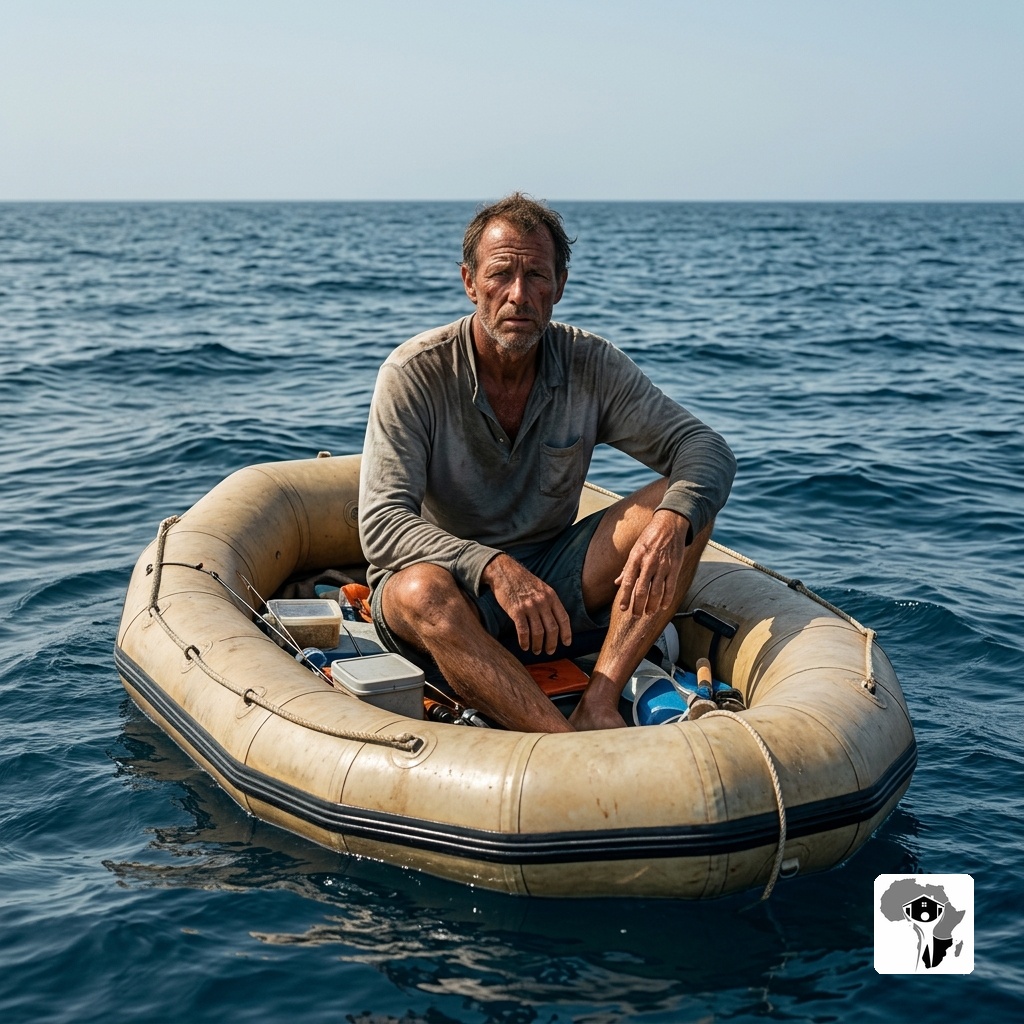
Seventy Six Days Floating Across the Sea on a Raft
10 Aug 2026