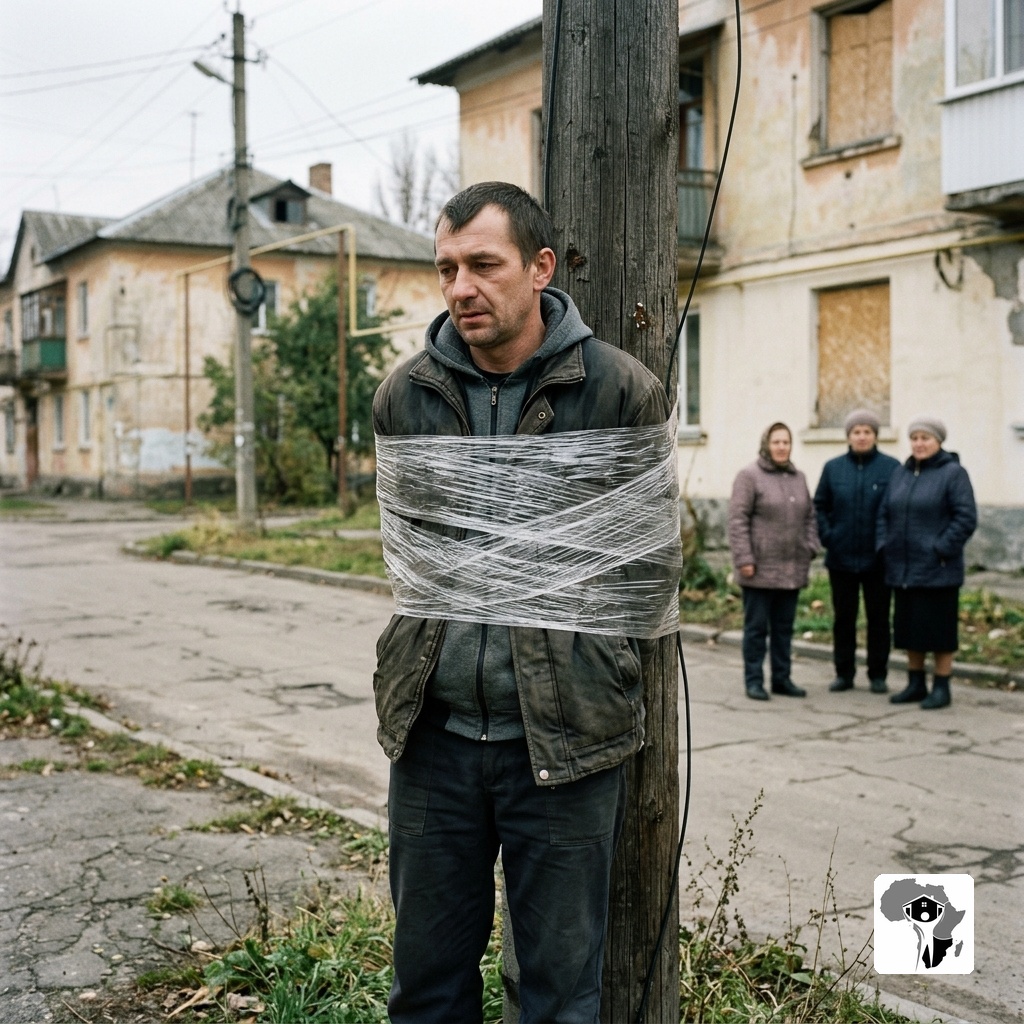
A suspected looters being restrained with plastic wrap during the early months of the war in Ukraine. (Digital Illustration: GoBeyondLocal)
How Suspected Looters Were Wrapped to Street Poles in Ukraine
In the first months of the 2022 Russian invasion of Ukraine, photographs and videos began showing people restrained against poles and other fixed objects with plastic wrap.
The people in those images were described as suspected looters or other suspected lawbreakers. The streets had become places where punishment could happen in full public view.
The practice appeared as Russian forces attacked Ukrainian cities and conventional policing faced severe pressure in some areas. Civilians, local militia and other informal groups took on roles connected with security and control.
Some suspects were tied to trees or utility poles with whatever materials were available. Plastic wrap became one of those materials.
The restraint itself could be strikingly simple. A person was placed against a fixed object, layers of transparent film were wound around the body and the suspect was left exposed to people passing through the area.
In some cases, photographs showed notes or explanations attached to the restrained person. The displays made the alleged offence part of the public scene.
One documented case came from Melitopol on March 2, 2022. A video recorded people described as marauders tied to trees in the city.
Research into the incident later grouped this and similar examples under the informal description plastic wrap civil justice, referring to a wartime form of vigilantism in which suspected lawbreakers were restrained and publicly displayed.
The people carrying out the restraints were operating outside ordinary judicial procedure. The available evidence describes civilians, local security groups and other informal actors taking control of suspects while the normal institutions of law enforcement were under strain.
That distinction matters because being accused of theft and being convicted of theft are different events. The documented cases concern suspicion and civilian punishment rather than completed court proceedings.
Some of the displays involved harsh treatment. Reports collected in later research describe suspects being whipped or chastised in some cases. Others were left exposed to the weather or to people passing nearby.
The public setting added another element. A person restrained against a pole could be seen by strangers, photographed and circulated online, turning a local act of punishment into material for a much wider audience.
The practice appeared alongside a wider breakdown in ordinary security arrangements. In places affected by fighting, residents faced looting, displacement and fear while police and other institutions dealt with the demands of war.
Some civilians responded by creating their own form of enforcement.
Researchers studying the phenomenon later found multiple examples from the first months of the invasion. The available records include social-media photographs and videos, with several cases linked to Ukrainian cities affected by the fighting.
The evidence also has limits. Identities of suspects and people carrying out the punishments were often unavailable, and the eventual legal outcomes for many detainees could not be established from the public material.
That uncertainty extends to the allegations themselves. A person shown restrained in a photograph may have been accused of looting, theft or another offence, while the available image alone cannot establish guilt.
The records therefore preserve two separate facts: civilians restrained people they suspected of wrongdoing, and the public punishment occurred outside a conventional court process.
The phenomenon became visible enough to receive a formal description in later research. The term plastic wrap civil justice was used for the wartime practice of binding suspected lawbreakers to objects with plastic wrap, tape, string or similar materials.
Photographs, videos and reports of the incidents preserved evidence of a period when ordinary ideas about who could detain a suspect and who could impose punishment were under severe pressure.

Other Dispatches

Holding the Compound Line During a Six Hour Siege
14 Aug 2026
The Tunnel Beneath Two Warehouses
13 Aug 2026
The Imposter Who Posed as Royalty to Steal Millions
13 Aug 2026
Infiltrating an International Cargo Dock Smuggling Ring
12 Aug 2026
Trapped by a Boulder in a Canyon Five Days Alone
10 Aug 2026
Left for Dead on Mount Everest and Walking Back Down
10 Aug 2026
Navigating Fifteen Hundred Miles Across Open Ocean
10 Aug 2026
Four Hundred Days Drifting Across the Pacific Ocean
10 Aug 2026
Seventy Six Days Floating Across the Sea on a Raft
10 Aug 2026
A Suspect Vanishes During a Bank Sting
10 Aug 2026
How a Forgotten Knife Sheath Caught a Hidden Killer
10 Aug 2026